
3 Victorian etiquette rules my heroines have to follow
While much changed for the children of Victorian society, especially compared to their grandparents, a generation before, much did not. Victorians still had similar rules of which they must abide and they fit perfectly for a sweet Victorian romance (historical romance) author, but even steamier authors can keep them in mind, and break them. These are some of the things I try to keep in mind while writing any sweet historical romance primarily set in the Victorian era.
Flirting
Flirting feels natural to us now, but it had its rules in the early to late Victorian era. Doing so too obviously could ruin a young girl's reputation. Go to far and you risked being labeled a flirt.
Shocking of a young woman.
So the prospective couple would have to be very subtle about their flirtation. You couldn't just walk up to a pretty girl and ask to buy her a drink (or as one guy did to me once, buy him a drink!) First, you had to convince a mutual friend or acquaintance to introduce you in public. Most often this happened at a ball and the hostess will have that duty. If like in Bridgerton, (60 years earlier than my usual era), he’s a mutual friend, they'll probably be formally introduced by her mother or brother, or by the hostess, usually before the guests sat down to dinner. The slamming into the Duke on a dance floor wouldn't likely result in an exchange of cards, unless someone introduced them. If they wanted to flirt after the fact, then she might whip out a handkerchief or fan.
But they would keep it chaste as possible. So, my heroines take care not to be labeled a flirt.
The Chaperone
Do you often read romance novels where the heroine goes out alone either all by herself or with the hero? That’s a modern fiction. It simply was not so in the Victorian era. A young, unmarried lady was never to be alone with a gentleman without a chaperone, either her mother, a sister, or an elder aunt. A maid or companion would do in a pinch, however. But she must never leave the family property without a chaperone. Come to that, she could never, ever be allowed to ride alone, in a carriage, with a young gentleman. Unless that gentleman was her brother. (Looking at you, Bridgerton Season 3, ep. 4) While we may swoon over that scene, it’s not historically accurate–even for the Regency era. So, women of good breeding (and likewise my heroines) always had a chaperone along. If not, they put their reputations–and that of their family– in jeopardy.
Letters
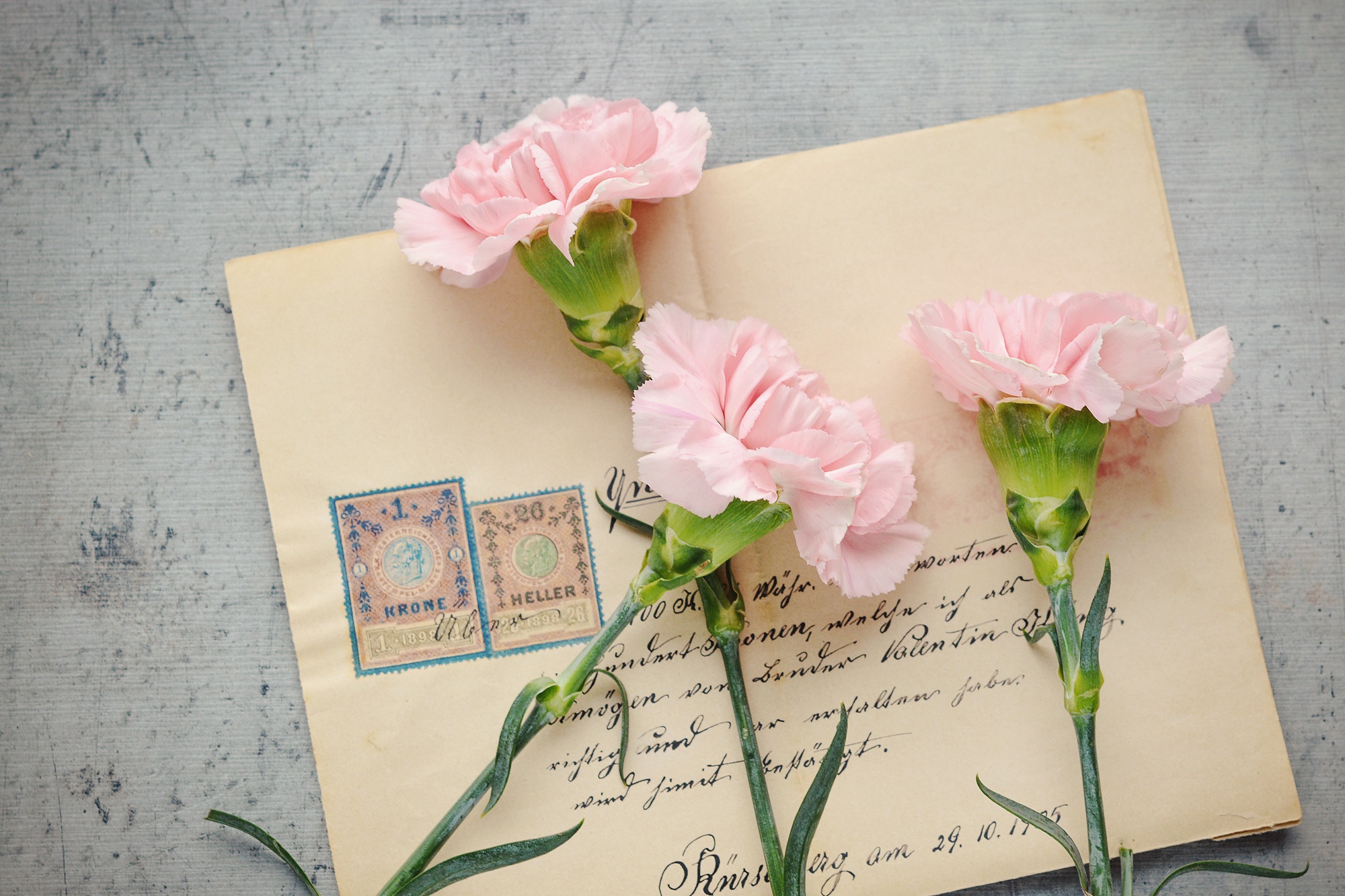
There was no writing to a young man or especially, a young lady, particularly in a romantic way, without permission from her parents. That’s why, in my latest historical romance Letters to Ellie, you see the hero proceeding thusly:
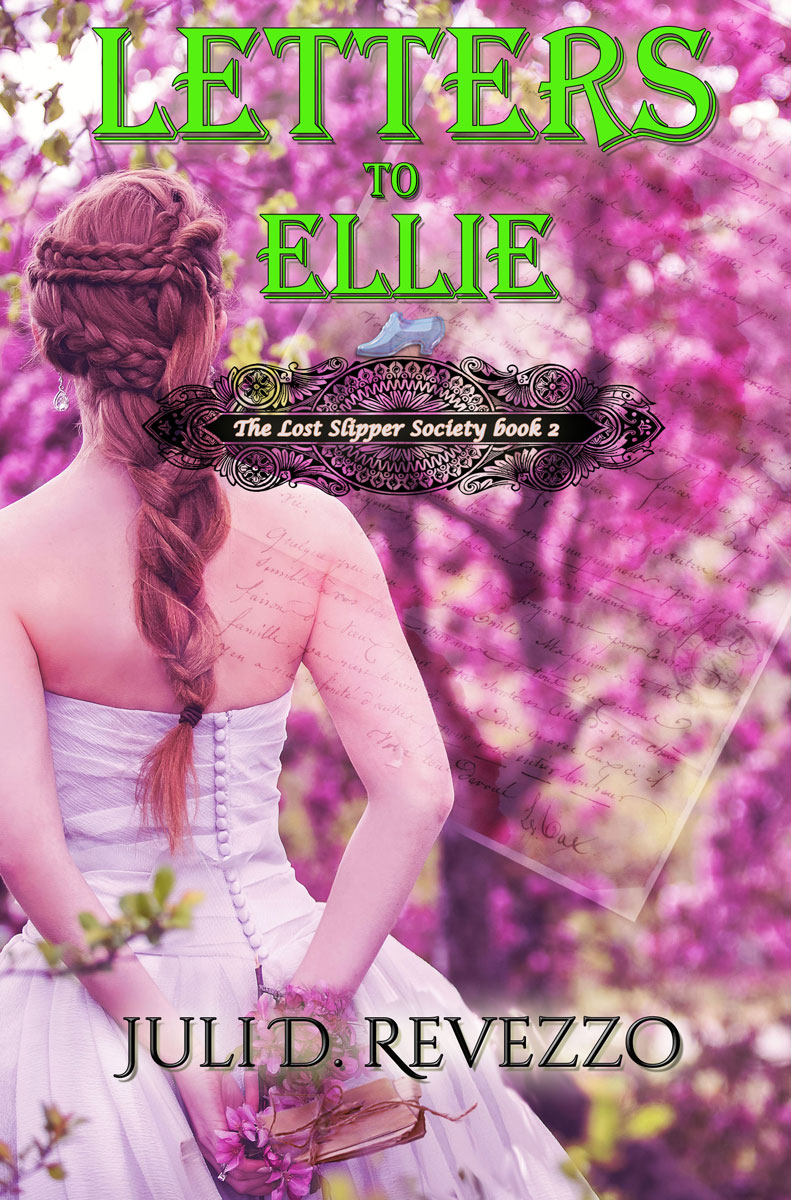
The valet opened the door. “Excuse me, Lord Bondry. Young Master Stephen? You’ve an urgent letter.” The fellow handed over a fine, cream-colored envelope.
Urgent? Good God. Had his friends met some disaster?
He read the message and his heart leaped. The letter was from Miss De Voss. She wanted to see him.
Stephen folded it into his pocket. “I’m sorry, Father, can we take this up later?” Not caring if his father said no, he already passed out the door. “I swear to you, I’ve never been more ready to assist in Luxembourg!”
He only stopped to change his shirt and coat.
He raced to the De Voss house.
In the parlor, Miss De Voss occupied herself with a half-finished embroidery screen. When he entered, she set her work aside, a little worry creasing her brow.
“Thank you for coming, Baron Bondry.” She waved to an empty chair. “I wanted to apologize for my behavior when we last met.”
Her behavior?
“That I could think of nothing but myself and a trip was unforgivable. I beg you not to hold it against me.”
“As you say, miss.” He couldn’t help how he wanted to laugh, but he didn’t want to give away that he teased her yet. So he held it in check. “You were quite annoying, it’s true.”
~~~
Distress deepened in her. “I’m sorry, sir. I’ll understand if you think I’ve wasted your day.” She offered her hand though. “I beg you to think on me more kindly in the future. Thank you for coming.”
He took her hand. “I don’t think you understand at all, Miss De Voss. I’d hoped to see you again, in fact.”
He wished to see her?
“Your preoccupation wasn’t unforgivable. It showed me you’ve admirable focus when there’s something you want.”
He’d accepted her apology? He took her hand? Eloise’s heart fluttered.
All too soon, he let her go. “It’s a lovely day. Shall we walk around the park, Miss De Voss?”
Her mother said, “Of course you may go. But remember Lord St. Vincent’s ball. She’ll need time to prepare, young man.”
“I promise not to keep her long.” Baron Bondry gave her a rakish grin that made her heart flutter. “If I can have a bit of your time before I leave for Luxembourg, and you for Paris, I’d like that”
“I—”
He raised a finger. “I’m not finished. I’d also like a place on your dance card, Miss De Voss. Tonight, if at no other party. And, with your permission, Lady De Voss, to write to your daughter, occasionally?”
Relief and delight flooded her. It seemed it was true. He liked her too. “You may have all you like, sir.”
She’d answered for her mother, and didn’t miss the crease of concern in her brow. Finally, Mother nodded. “You may, Lord Bondry.”
This season hadn’t been wasted, after all. Had it?
To do otherwise denoted an intimacy that the couple might not actually have yet. So of course writing her love letters was absolutely not allowed without permission. Now, did couples write to each other on the sly? Of course they did. They probably did a lot of things that the etiquette manuals advised against. More than likely, that’s why the manuals existed in the first place. But if any of those letters were discovered, it could impact the young lady’s reputation and prospects for the future.
There were other things, they weren't allowed to show anger. Imagine trying to keep your mouth shut when a street scamp tried to con you out of your pin money, or when Darcy told you off. Who wouldn't want to deck him?
Alas, it was against the rules.
Why were these rituals such a big deal for the Victorians?
Remember what we spoke of in my last video where I mentioned that middle class families were not only trying to survive in Victorian world with all its attendant problems but that they were trying or at least looking like they were trying to social climb? This explains the reliance on the etiquette books and all of the self-help books that came out at the time explaining to young ladies and gentlemen of the middle class how to act like their betters. If a girl was seen as bucking that system it was a shocking disgrace. It might dictate her space in the social sphere, and could be social suicide if violated.
It would have an effect not only on her reputation but also on her parents and perhaps her little sisters and older brothers. One mistake of one young lady in the family could ruin the entire family's reputation. And once that reputation was tarnished in the eyes of the ton or the upper 10,000 it was very hard to recover.
Think of how Tess is treated in Tess of the d'Ubervilles. The poor girl is tricked into accepting the advances of this detestable boy, who then proceeds to misuse her in a very violent fashion (if you've read the book you know what he does to her) and from there on out, she has nothing but trouble and is never taken seriously in society again. The same thing happened to the heroine of George Eliot's Adam Bede (except that she takes a slightly different route than Tess but ends up in the same end, again, I won't quote it here, and warn those sensitive to loss of a child to take caution with chapter 43). Similar circumstances also befalls Lily Bart, the heroine of House of Mirth. While she's trying to social climb, she falls under the spell of her friend's husband and ruins her own reputation when she probably should have just married the lawyer who was in love with her.
Such things could break a young woman in the Victorian era, no matter how high in society her family was.
So these etiquette guides and the behavior of the children of a middle-class family just like those of an upper class family were taken very very seriously. And young girls had it pounded into their heads the consequences of breaking any of society's rules.
What should a writer of historical romance do, then?
So, you're an historical romance author and want to write in this era and I hear you, you're now wondering, how in the heck do I write like my favorite romance authors but stay true to the era? Well, carefully. I'm not saying I make my characters always follow the rules. Here's a secret: neither did the people in any other era. They knew how to work inside of the system.
Three rules they tend to break
Remember the saying “well behaved women rarely make history”? That actually gives the novelist freedom “the rulebooks” forbade.
So what do my characters do to “skirt the rules”, so to speak?
Running in public.
Girls were expected to maintain grace and decorum. Outburst of joy were unseemly. As a young lady, you were expected to keep control of your emotions. So you certainly would not be allowed to take up your little brother's challenge to a race down the sidewalk, or in the case of my heroine in Courting the Stationmaster's Daughter, her younger sister:
HONORINE CAMDEN WASN’T inclined to public outbursts of exuberance. Her younger sister Isabelle decided she needed to make a change as her mother passed through the door leading out from the platforms of Wallflower Subway Station. “Race you to Father’s office?”
“What did you say, my dear?” Mother asked.
When Isabelle slipped through the entrance, Honorine hiked her skirts up, and sprinted after her.
Restlessness had stirred in Honorine all morning. Her day had gone from fine to worse since breakfast. Her visit to Lady Bascomb’s home to ask assistance with her application to Bedford College—the premier women’s college in nearby London—had only met with failure.
Glad she had left the bustle out of her ensemble, Honorine ran, ignoring her mother’s scolding cry, “Isabelle, Honorine, come back this instant!”
The exasperation in her mother’s voice said Isabelle’s sixteen years was too old for such play. Honorine knew she should agree, yet her edginess welcomed the outlet. Her skirts slowing her down and turning her run into more of a fast stroll, she weaved through the crowded subway terminal, ignoring annoyed responses from everyone she passed. Isabelle had the advantage of thinner underskirts and shorter heels. Honorine was determined to catch up.
“Everett?”
Did she hear someone speak her father’s name?
“Look out!”
Watching her feet, and a small radius ahead, a blur of black and a flash of red hair registered at the last second before Honorine slammed into a man’s hard body. Strong hands steadied her and she blinked at her living obstacle.
“Miss Camden, are you hurt?”
The tall man, somewhat portly, but with a handsome face, and a perfectly combed mop of red hair she’d collided with was her father’s second in command. “Oh. Shane. Uh, Mr. MacIntyre.” She glanced to the other men with him, her father and ... the third fellow’s name was Johnson—maybe? Flustered, she recognized him only as a railway man or other. Oh, her father was going to kill her, she was sure! How should she cover her gaffe? “I’m sorry. I didn’t see you.”
****
Oops! Honorine would've definitely deserved the scolding she's sure to receive.
Gossip:
“According to Debrett’s: “Nothing so degrades a woman as to talk about the degradation of another. Detraction generally proves the weakness as well as meanness of the party who employs it.”
Bad-mouthing other people might be seen as harmless and enjoyable gossip, but it demonstrates the indiscretion, and sometimes the malice, of the perpetrator.
“Secrets and confidential communications are dangerous topics of conversation at all times, and should be indulged in with the utmost caution.”
Betraying confidences, however enjoyable, will simply highlight your untrustworthiness.
Being the girl who spread gossip, in those days, could really affect one’s reputation. No one wanted to be near a gossip for long. Even those who loved to collect the news from said-gossip.
So my heroines never gossip–unless they are mischievous on purpose, or have mischievous side characters.
(Incidentally, my forthcoming Lost Slipper Society novel's inciting incident is caused by the heroine's gossipy little sister! Join my newsletter here to keep abreast of news of its release!)
Kissing!
Because really, romance authors, isn't that what we're here for? People, I know, will get riled up about the historical appropriateness of the subject in romance. But like kids today, like you did when you were a young unmarried woman (or man) you found a way around the rules. How? How do you write a romance with those restrictions?
Victorian men and women would invite each other out for walks. The girl might proceed to “trip” and the young man had no choice but to catch her. And she wouldn't just do it in the middle of the park where everyone watched. She would wait until they rounded a bend in the path beyond sight. While he would tug her under the mistletoe at Christmas. Or wait for her to open her parasol out in her mother's gazebo.
With no one the wiser.
The chaperone? Well, they could simply say. “Miss Smith, Mr. Jones said something that I had to lean in to hear.” Those are just a few ideas.
Maybe your young man and woman pretend to be courting. Or maybe they really were a couple. Courting alone gave young lovers a lot more leeway than modern people tend to believe. If they could get away with flirting in public, believe me, they knew how to grab stolen moments in the same chaperoned environment. I'm sure you can think of more. But if you can't, here's a tip. Go hunt down some old movies. I'm talking movies from the 40s and 50s. How did they show they're characters falling in love? Believe me, the Carriage scene in Bridgerton isn't how the golden era of MGM pulled it off. Hands off (or above the bra) doesn't have to mean boring!)
And if you write steamier and want to do Bridgerton, go for it. I'm not saying nay. I'm just saying in that time period under the restrictions of a middle to upper class couple, rules existed that might add some …variety to your typical romance beat sheet. But, here's an idea, once a couple was engaged, they were considered all-but married. If you want to be historically accurate as possible, forgo the meet cute and have the couple be engaged.
Or have them break the rules. Many a bastard was born in those eras, and as my dad once said of his teenhood in the 40s and 50s, “Oh, please. I used to crawl in girls' windows all the time”. Just because it's not talked about doesn't mean it didn't happen!”
Authors, tell us in the comments below, what rules have you bent when setting up the society in which you've set your historical romances?
Can you think of more, less scandalous, ways around the rules in the etiquette manuals?