Beyond the Ballgown: The Key Differences Between Regency Romance and Late Victorian Romance (1870s–1890s)
The Victorian age often finds itself blended in popular imagination with the world of Jane Austen and Regency romance. Probably Amazon's fault for lumping all historical romance together into one category… but is that actually accurate?
Why Regency Romance Is Often Confused with Victorian Romance
Frankly, no. Though we love Jane Austen for her idyllic stage dressings, refined manners, and elegant social rituals, her world and her novels, represent the early Regency, not the Victoria era that came later. She was born during the late Georgian–and died before ever seeing the Victorian era. She would never have entertained a French émigré in the Victorian sense, never have envisioned a queen ruling over a global empire, nor–gasp–seen a bustle gown let alone double gasp women working in factories.
Or perhaps she did. Imagination is a powerful thing. None of this is meant as a criticism of her, but her books are a product of her time and relatively narrow, privileged view of life.
If she were born fifty years later, how would she have written the mighty Elizabeth Bennett? Like the husband-hunting Elizabeth? Or the keen-witted Miss Eliza Scarlet or Becky Sharp? Would her characters be giddy to marry officers? Or French artists? Or swoon railway tycoons? Would she have ever dreamed that in America, the west was expanding? What if she sent Emma to marry a gold miner in Colorado? Or to seek the advice of a detective at 221B Bakers Street? ;)
We'll never know, because she died too soon, unaware, or at least, tight-lipped about the real societal shifts taking place. This is exactly what separates Regency Romance from late Victorian romance novels set in the 1870-1890s.
Sweet Victorian Romance vs Regency Romance: Key Differences
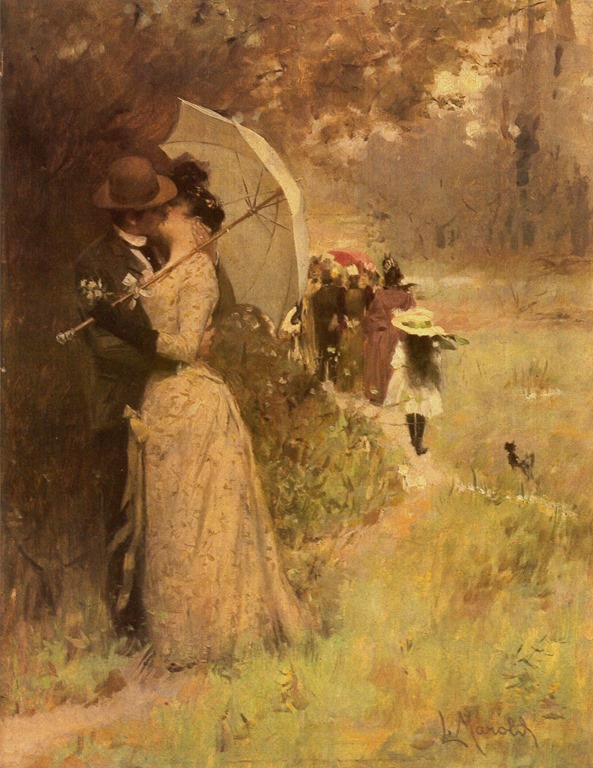
I know, I know. We don't want to think of those things. And that’s exactly what you look for in a “Costume romance”, right? Refined manners, and a world of distance and safety? But the Victorian era was far more complex. Unlike the candlelit drawing rooms of a Regency Romance world, The late 1870s-1890s were characterized by gaslights, industrial expansion and a queen took the throne and ruled for 70 years. Women's rights movements gained momentum, transforming Britain’s global identity.
The Victorian World of Industry, Change, and Romance
At the same time, railways developed, steamships, and inventions blossomed changing the way people lived. Hot air balloons took flight! Explorers began dreaming of the Arctic and Antarctic continents. Workers began fighting for their rights. The uber-rich and titled weren't necessarily the pinnacles of success any longer. A middle class emerged. The aristocracy was no longer the ultimate goal.
One wonders, what would Jane Austen’s work look like if she’d witnessed it all? (Or, at least, I do.)
Can you see her waxing poetic about a truly destitute girl being swept off her feet, not by a guy who was slightly richer than her (looking at you, Marianne Dashwood, miss “moaning at a roomy house most Londoners of her era would kill for”), but by a tycoon owning three railways or maybe a steamship company and a flat overlooking Regent’s Park?
Becky Sharp and the Victorian Heroine
Thackery’s heroine Becky Sharp, (the main character of his fantastic novel Vanity Fair) on the other hand, escapes her precarious beginnings and enters a wealthy (if decaying) social world but ultimately emerged triumphant, having saved herself. Fortune in hand and a good (but not necessarily needed) fiancé in her reticule. She’s defined not by her ability to land the husband, but by ambition and adaptability, while securing her HEA. What a striking figure she remains!
From Regency Rakes to Victorian Restraint
And the rakes of the Regency? Perhaps they’re not quite the same in the Victorian imagination. While the Regency leans on the “Rake” archetype, late Victorian romance fiction tends to favor men shaped and ravaged by restraint. Quieter tension personified proper society, public displays of rakishness were frowned upon. Think, less wet-shirt Darcy, and more, of Darcy’s restrained hand-flex. Or even better the kind of aching restraint you’d see in books like House of Mirth, where Lily Bart and Lawrence Selden are each yearning for what is just out of reach—Lily for security within society, and Selden for Lily herself. So much yearning.
That, friends, is the romance of the Victorian era—and the world in which sweet Victorian romance novels by authors like Elizabeth Camden, Mimi Matthews, Suzanne G. Rogers, and many others (including many of my own sweet Victorian romance novels) live.
Not in Jane Austen’s idealized world of drawing rooms and parsonages. In Becky Sharp’s world.
Come join us, but leave your white linen at home. We’re off on an adventure through railways, coal smoke, and possibility. It’ll be fun, I promise. :)
Love stepping into the past?
If you enjoy sweet historical romance filled with sweeping emotion and vivid history, you'll feel right at home here.
Before you go, grab a free, sweet historical romance short story when you join my VIP reader newsletter list. You'll also get exclusive history trivia, sneak peeks, and book updates delivered straight to your inbox!
[👉 Claim Your Free Story & Join the Community]:
You can also browse my complete collection of sweet Victorian romance novels right here on my bookstore.