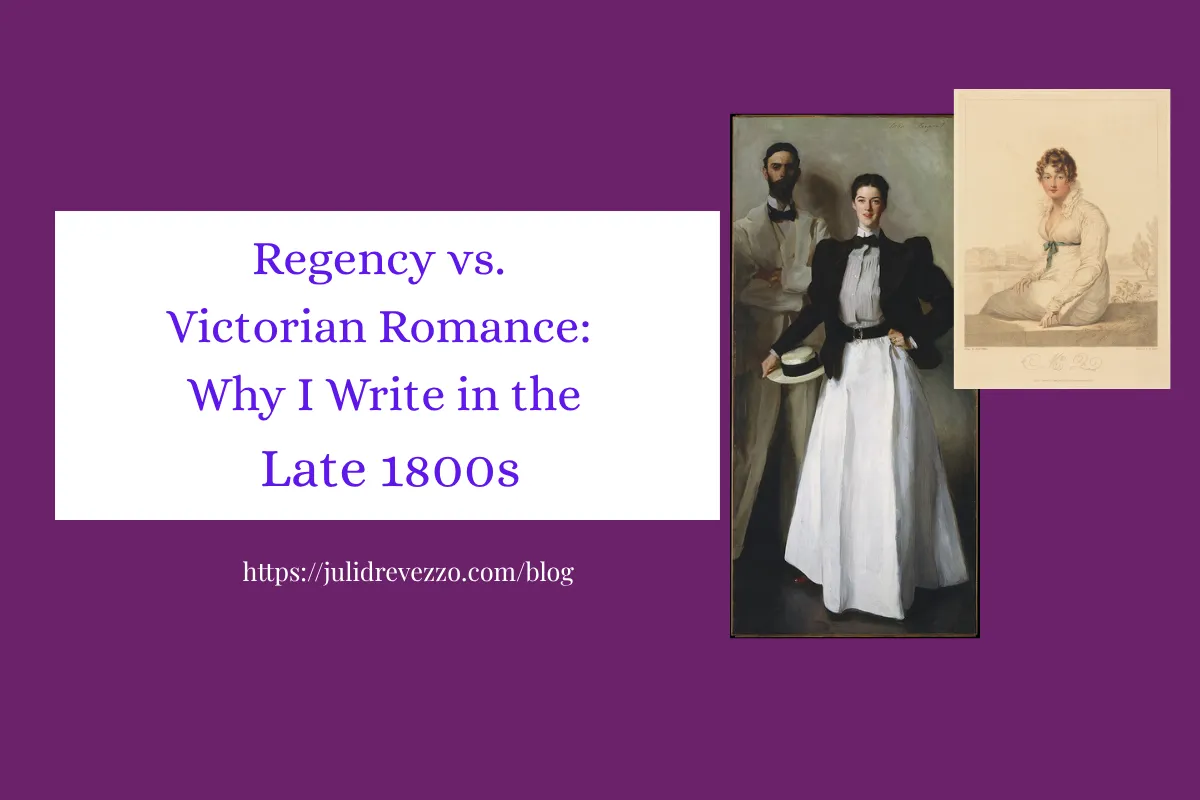
Regency vs. Victorian Romance: Why I Write in the Late 1800s
First thing to know about me as a historical romance author is that I love exploring the paths less traveled. While the Regency era is wildly popular—and I have read and loved fantastic authors like Stephanie Laurens and Tessa Dare and others who drew me into historical romance—my own heart as a writer permanently resides in the late Victorian era.
My Connection to the Era
For me, the spark happened back in college while studying Victorian literature and art. I completely fell in love with the vivid imagery of Dickens, the timeless romance of Bram Stoker, and the magnificent French Belle Époque artists of the same period, like Renoir, Rodin, and Camille Claudel.
That college-era deep dive shaped my whole worldview on feminism and romance:
The Grit of a Changing World: Learned firsthand through the pages of Charles Dickens.
Tragic Beauty: Inspired by Alfred Lord Tennyson's The Lady of Shallott and choosing your own destiny.
Independence: Found in Virginia Woolf's essays on a woman's need for a "room of one's own"—ideas forged by her childhood at the tail end of the Victorian age.
As a Gen X woman, I find myself deeply drawn to stories where heroes and heroines navigate a world undergoing massive, fast-paced evolution. The late Victorian era offers a uniquely rich backdrop for romance because it was a time of incredible transitions.
In earlier eras, women’s legal and social freedoms were heavily restricted by strict systems of chaperones and property laws. But by the late 1800s, things were shifting in a beautiful way. Women were actively stepping into higher education, running their own businesses, and fighting for legal rights like the Married Women’s Property Acts. They weren't just waiting to be saved; they were actively shaping their own futures.
Technology & Innovation
The technology of the era is a historical romance novelist's dream! The Victorian era gave us an explosion of life-changing innovations that completely altered daily life and courtship.
We see the arrival of:
Trains
Sewing machines
Typewriters
Photography
Bicycles
The telegraph
Early electricity
Imagine the romantic possibilities of a couple sharing a secret telegraph message, or going on a scandalous, unchaperoned bicycle ride together!
Regency vs. Victorian: Fashion & Manners
Fashion
Speaking of fashion, this highlights my previous post on bustles:
While early Victorian crinolines could look like giant balloons, the late Victorian era brought in gorgeous, structured bustles, elegant lines, and rich, tailored fabrics that are absolutely stunning to write about.
Now, I know my Regency friends are going to say, 'But wait, Regency empire waists are so classic, flattering, and way more comfortable than Victorian corsets!' And you are so right about the comfort factor! Empire waists definitely win on a hot day. I just love the dramatic structure, the rich fabrics, and the layers of a late Victorian bustle for writing high drama (and see my last video on Bustles on trains)—but I totally get the beautiful appeal of the classic Regency look, too!"
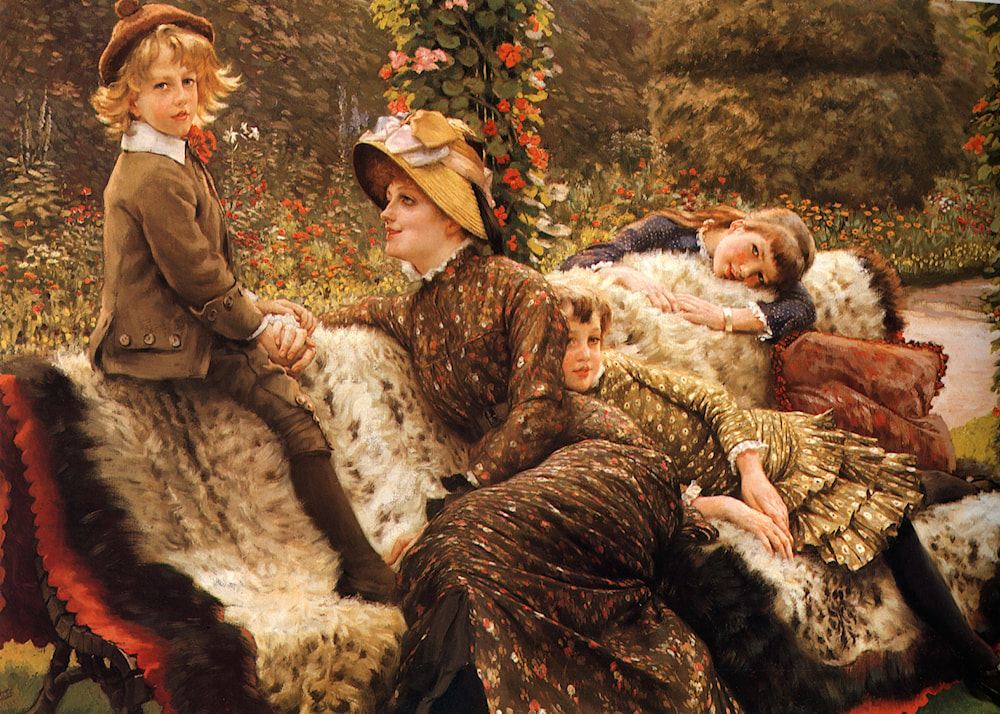
See how she can sit just fine on that Garden Bench? nods That's what I was talking about in my previous post.
The Truth About Victorian Manners
When you think of the Victorian era, likely you think, “Oh, how repressed they were.” But the reality is rooted in a massive societal shift.
The Industrial Revolution created a new wealth class: the middle class. This group grew up admiring the upper class but were still considered outsiders. Desperate for respectability, they often idolized and emulated the aristocracy (who people started to call the "Upper Ten Thousand"), frequently seeking advancement through strategic marriages for their daughters.
Middle-class families spent exorbitant amounts on clothing, housing, and other trappings to mirror high society. They regularly consulted printed primers for advice on how to act around their “betters.” The middle class took these older social rules and codified them into etiquette manuals—often exaggerated—as a way to present their own air of respectability in this ever-shifting landscape.
Finding Romance in Progress
The Victorian era isn't just about stiff collars and smog—it's a world alive with progress, passion, and people finding their voices. That is why I love writing in this world so much.
It's the exact inspiration behind my novels Watchmaker's Heart, House of Dark Envy, the Camden Girls series and The Lost Slipper Society series, where my heroines navigate this fast-changing world on their own terms.
If you're looking for your next late-Victorian escape, check out my books for plenty of elegant lines, clever heroines, and sweeping romance.
And even my steampunk romance series:
****
Header image Mr. and Mrs. I. N. Phelps Stokes by John Singer Sargent American, 1897: https://www.metmuseum.org/art/collection/search/12140